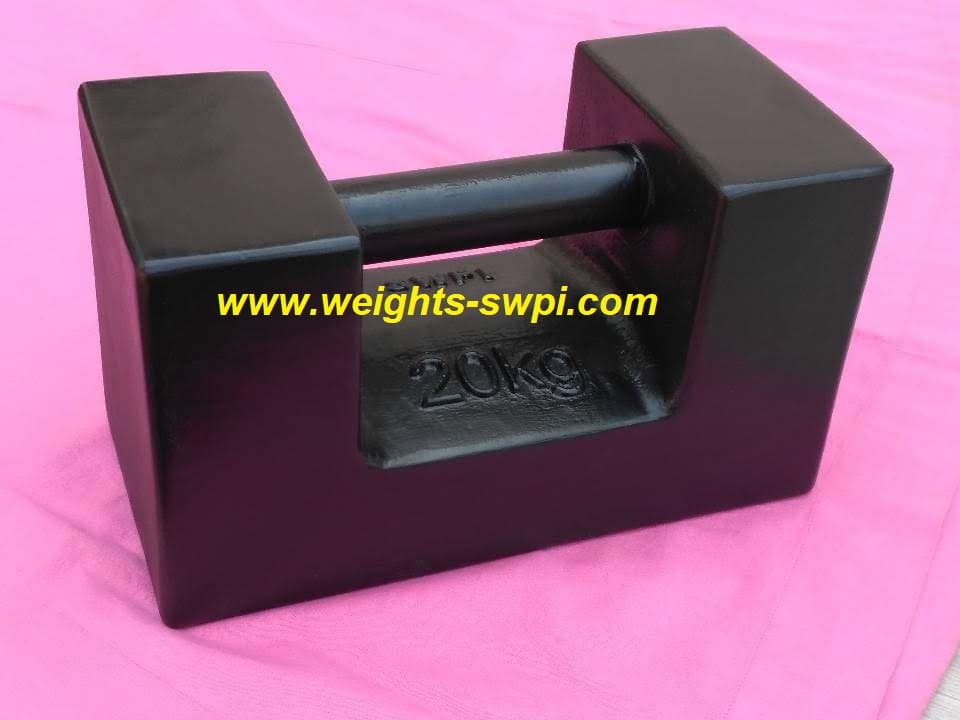
"Step-by-Step Process for Calibration of Industrial Weighing Scales | OIML M1 Standard Weights"
🔧 Introduction
Accurate weighing is the foundation of every industrial process — from manufacturing and logistics to pharmaceuticals and trade. Over time, industrial weighing scales may drift from their original accuracy due to mechanical wear, environmental changes, or load cell fatigue.
That’s why regular calibration using OIML M1 accuracy class standard weights is essential to ensure measurement reliability and compliance with global calibration standards such as ISO/IEC 17025.
⚙️ What Is Calibration of an Industrial Scale?
Calibration means comparing the reading of a weighing scale against a known reference standard weight and adjusting it until the readings fall within the permissible tolerance range.
This ensures that every reading displayed by your scale is traceable, accurate, and certified.
🧰 Equipment and Reference Standards Required
Equipment / Standard Description Accuracy Class
OIML Standard Weights Certified test weights for calibration M1, F2, or E2
Calibration Certificate Traceable to ISO/IEC 17025 accredited laboratory —
Temperature & Humidity
Meter For recording environmental conditions ±1 °C / ±5% RH
Cleaning Tools Brush or soft cloth for removing dust/oil —
Internal Link Suggestion:
🔗 Explore our range of OIML M1 Class Standard Weights for precise industrial scale calibration.
🧪 Step-by-Step Industrial Scale Calibration Procedure
1. Preparation
- Clean the weighing platform and surroundings.
- Level the scale using its built-in leveling screws.
- Allow the scale to warm up for 15–30 minutes.
- Record ambient temperature and humidity.
- Ensure there are no vibrations or air drafts.
2. Visual & Functional Check
Inspect:
- Display readability and zero indication.
- Load cell condition and cable connections.
- Any corrosion or mechanical damage.
3. Zero Adjustment
With no load on the platform, the display should read 0.000.
If not, reset the zero or perform internal zero calibration.
4. Applying Test Weights
Use OIML-certified standard weights and apply them at multiple test points (0%, 25%, 50%, 75%, and 100% of capacity).
Record both increasing and decreasing load readings to assess repeatability.
Load (kg) Display (kg) Error (kg) Allowed Tolerance (M1) Result
0 0.000 0.000 ±0.5 d ✅
500 500.2 +0.2 ±0.5 d ✅
1000 1000.3 +0.3 ±1.0 d ✅
1500 1500.4 +0.4 ±1.0 d ✅
2000 2000.5 +0.5 ±1.0 d ✅
5. Adjustment (If Required)
If the error exceeds the tolerance, perform span adjustment using the scale’s calibration mode or service menu, then repeat testing.
6. Repeatability & Eccentricity Tests
Test Type Objective Method
Repeatability Consistent reading for same load Load 500 kg repeatedly 3–5 times
Eccentricity Uniform accuracy across platform Place same weight at all corners and center
Allowed variation: ±1 division (d).
7. Record Environmental Data
Document:
- Temperature
- Humidity
- Barometric pressure
- (For precision labs, apply air buoyancy correction.)
8. Documentation & Certification
Prepare a Calibration Certificate with:
- Scale make, model, serial number
- Calibration weights used (with OIML class & certificate no.)
- Ambient conditions
- Test results & uncertainty
- Technician signature
Parameter Details
Equipment Industrial Platform Scale
Capacity 2000 kg
Division 0.5 kg
Weights Used M1 Class (OIML Certified)
Result Within permissible error
Certificate No. SWPI/IND/2025/120
Validity 12 months
Internal Link Suggestion:
🔗 Download sample Calibration Certificate format
9. Labeling and Next Due Date
After successful calibration:
- Affix a “Calibrated” sticker.
- Mention date of calibration and next due date (usually 12 months).
📅 Recommended Calibration Frequency
Application Recommended Interval
Laboratory balances Every 6 months
Industrial platform scales Every 12 months
Truck / weighbridge systems Every 6–12 months (depending on usage)
🧩 Best Calibration Practices
✅ Use OIML M1 or higher-class weights.
✅ Keep all records traceable to ISO 17025 laboratories.
✅ Avoid overloading or shock-loading the platform.
✅ Conduct linearity checks periodically.
✅ Maintain a calibration logbook for audits.
Internal Link Suggestion:
🔗 Read more: Importance of OIML M1 Class Weights in Calibration
🌍 Conclusion
Regular calibration of industrial weighing scales ensures:
- Measurement accuracy
- Regulatory compliance
- Improved process quality
- Reduced losses and disputes
Using OIML M1 certified standard weights and following ISO 17025 procedures guarantees reliable and traceable calibration results — keeping your industrial operations efficient and trustworthy.
🔖 Related Topics (for Internal Linking)
- Why Choose OIML M1 Accuracy Class Standard Weights
- Calibration of Weighbridge and Truck Scale
- Demerits of Uneven Test Weights and How They Affect Calibration
- Quality Test Weights for Precision Calibration